
The Maasai People Of Orkinyei Cultural Village, Masai Mara, Kenya
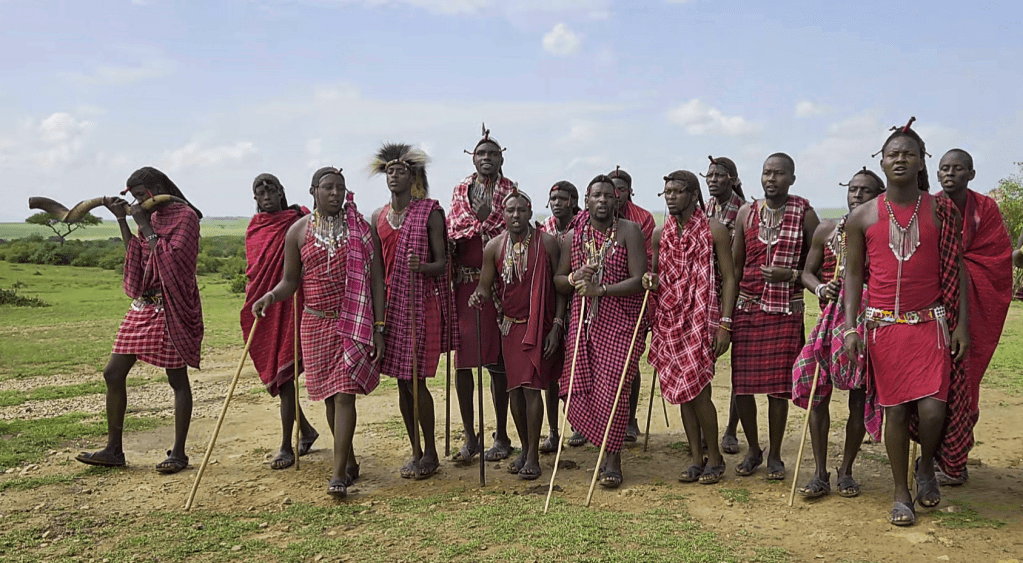
Have you ever wanted to know more about the origins of the Maasai People? About their colourful clothing, unique high jumping dances, or greeting songs? Do you want to discover insights into their fascinating traditions based on their nomadic and pastoral lifestyle? How they live in harmony with nature, why cows are so important to them, or how they are known for being stewards of the land?
Learn more….
The Maasai People
Now you can through this delightful book, The Maasai People, that captures their life story in a compelling account from their historic origins to their current day practices. Suitable for the whole family and as an educational tool.
Proceeds to go towards school supplies (desks, pencils, books), uniforms for the children to attend school, or food to feed them while they attend, and other necessities as required.

Introduction
Welcome to the world of the Maasai!
One of Africa’s largest and most iconic ethnic groups, the Maasai are renowned for their distinctive way of life. From their bright red clothing, spears in hand, and high jumping dances to their pastoral traditions and semi-nomadic lifestyle, they have captivated the international media and travel industries throughout the world.
Being remarkable trackers with generations of knowledge of their lands and its wildlife has also cast them in the spotlight for their important roles in nature conservation. The Maasai are well-known as guides and drivers on safaris because of their links to the reserves and the national parks near where they reside in Eastern Africa. And they welcome visitors to their villages to learn more about their lifestyle.
A group of about 1.5 million people, their name Maasai (not Masai) is derived from the Maa language this noble tribe speaks and means “My People.” Although sometimes spelled as Masai, this misspelling began with the European colonizers in the mid-eighteen hundreds and has sometimes carried through to current times in some instances but is not used by the Maasai people.
While the Maasai now live in southern Kenya and northern Tanzania along the Great Rift Valley on semi-arid and arid lands, this wasn’t their original homelands. Their journey from more northern climes, fraught with colonialism, displacement and struggles to retain their lands and to stay true to their cultural practices and traditions, is a phenomenal story of resilience. Somehow, they have managed to remain largely untouched by modern day civilization even on their current marginalized lands.
The insights in the following chapters delve into the unique world of the Maasai, most of whom reside near the national game reserves and conservation areas of the Maasai Mara in Kenya and the Serengeti in Tanzania.
While there are twenty-two geographic sectors or sub-tribes of the Maasai community, each has its own traditions, habits, fashion styles, leadership and dialects developed over the centuries, often due to outside influences.
Occasionally discrepancies about their fascinating lifestyle will appear on social media sites and through material provided by researchers and personal experiences of people visiting the various regions and villages. However, the basics of their colourful culture is still one that captures the curiosity of visitors the world over.
The focus of the narrative and majority of photographs in this book are on those living on the Maasai Mara from the Orkinyei Cultural Village near the town of Talek who so graciously welcomed us into their community and homes. We are grateful to them for sharing insights on their lives.

 Judith Silverthorne